

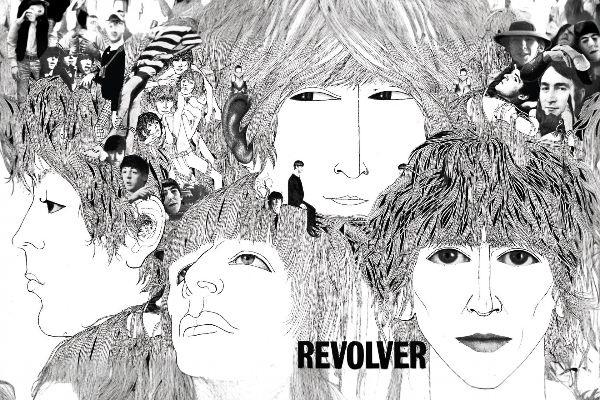
If Steve Jobs of Apple could take a lesson or two from the Beatles in running a company, President Prabowo Subianto should start listening to the Fab Four, especially their Revolver, one of the best albums ever made, which this month celebrates its 60th anniversary.
But then again, you should never trust people who don’t listen to the Beatles.
No, this is not a joke.
In 2003, Steve Jobs told 60 Minutes that the Beatles were his model for business. What he admired was not merely their talent. It was the way four very different people kept one another’s weaknesses in check, balanced one another and produced something greater than the sum of their individual parts.
There is a lesson here for governments too.
The Beatles did not become the Beatles by repeating what had worked yesterday, or in Yesterday. They became the Beatles by refusing to stand still. By 1966, they were already among the most successful musicians in the world. They could have continued producing variations of the songs that had made teenage girls scream and filled concert halls around the world.
Instead, they went into the studio and began doing strange things.
They experimented with tape loops, backwards recordings, Indian instruments, unconventional arrangements and radically different approaches to songwriting. Revolver, released on 5 August 1966, was the product of a band discovering that success gave it not the obligation to repeat itself, but the freedom to experiment. The Beatles’ own account of the album emphasises precisely this: longer studio time enabled greater creativity and experimentation.
That is why Revolver may have something to teach Prabowo. Not about music, obviously. About governing.
Indonesia today has a president who seems to believe that governing means constantly producing new programmes, new slogans, new initiatives and new declarations. There is always something to announce: a new food programme, a new economic scheme, a new institution, a new target, a new promise.
But a government can be very busy without necessarily being very intelligent.
It can confuse activity with achievement, announcements with implementation, ambition with competence and novelty with innovation.
Perhaps what Prabowo needs is not another team of people telling him what to announce. Perhaps he needs to listen. To the Beatles.
Start with “Taxman”: Let me tell you how it will be…
The song opens Revolver with George Harrison’s sarcastic complaint about taxation. It is not a manifesto for libertarianism, but a reminder that governments have a habit of taking things from people and then behaving as if the money belongs to the government rather than to the people.
For a president presiding over an enormous state budget, the lesson is simple: public money is not presidential money.
Every rupiah spent on a government programme has an opportunity cost. Money spent here cannot be spent there. Money spent on an ineffective programme is money unavailable for a more effective one. And when government spending grows, it is ultimately citizens who pay, through taxes, inflation, debt, reduced public services or foregone opportunities.
This is particularly relevant to the government’s flagship Makan Bergizi Gratis, or MBG, programme. The question is not whether Indonesian children deserve nutritious food. Of course they do.
The question is whether the government is designing and implementing the programme in the most rational, accountable and effective way possible. A good intention does not automatically make a good policy.
Then comes “Eleanor Rigby”.
This Paul McCartney’s masterpiece may be the most important lesson of all.
The song takes two obscure, lonely people, Eleanor Rigby and Father McKenzie, and turns them into the centre of a story about human isolation. There are no kings, generals or billionaires here. No grand historical events. Just people whom the world barely notices.
That is what government should learn to do: look at the very people whom power normally fails to see.
There is the ten-year-old Yohanes Bastian Roja, an elementary school student in Ngada, East Nusa Tenggara, who died by suicide in February this year after his parents could not afford a pencil and notebook.
There is Mandala Risky, a vocational school student in Samarinda, East Kalimantan, who died in May after reportedly walking to school every day in shoes that were too tight.
There are people like Yurizal, who was reportedly subjected to online bullying in July after complaining that he had been forced to wait eight hours for medication at RSCM, the country’s largest state hospital, before dying several days later.
And there are countless others who rarely make it into presidential speeches: mothers who cannot afford transport to a health centre; farmers whose harvests fail; teachers working in remote villages without adequate pay or recognition; citizens who spend an entire day navigating an absurd bureaucracy simply to obtain something that should have been straightforward.
These are not footnotes to government policy. They are the reason government exists.
A president does not govern a collection of macroeconomic indicators. He governs people.
The tragedy of government is that it can become increasingly sophisticated in its spreadsheets while becoming increasingly distant from the people represented by those spreadsheets. Hunger becomes a percentage. Poverty becomes a target. Education becomes a budget allocation. A child becomes a beneficiary number.
And somewhere between the spreadsheet and the presidential speech, the human being disappears.
“Eleanor Rigby” tells us to look down. Not at the palace. At the people.
Then, perhaps surprisingly, there is “I’m Only Sleeping”.
Imagine if Prabowo listened to this one. The Indonesian state could use a little more sleep.
Not literally, of course. A president who sleeps through his responsibilities is hardly an attractive political model. But there is something profoundly valuable about the ability to stop.
Not every criticism needs an angry rebuttal of Londo Item or Antek Asing.
Not every political problem needs a new programme.
Not every idea that occurs in a meeting needs to become a presidential initiative. It is laughable to listen to Lt. Col. Teddy Indrawijaya explaining about Prabowo read all books given to students.
Sometimes a leader needs to read the data, listen to opposing arguments, go home, sleep and think about it again in the morning.
A government that never pauses to think eventually mistakes motion for progress.
This brings us to “Love You To”, George Harrison’s exploration of Indian musical traditions and philosophy.
The lesson here is intellectual humility.
The Beatles were not afraid to discover that their existing musical vocabulary was insufficient. They looked outside themselves. They listened to sounds and traditions that did not originate in Liverpool. They allowed unfamiliar influences to change what they were capable of producing.
A government should behave similarly.
Indonesia is too complicated to be governed exclusively by the assumptions of people who already occupy positions of power.
A president should listen to economists who disagree with him, academics who challenge him, civil society groups who criticise him, teachers who understand education better than politicians do, farmers who understand agriculture better than bureaucrats do and citizens who experience government policy from the receiving end.
The ability to learn is not a sign of weakness. It is a sign of intelligence.
“Here, There and Everywhere” offers another lesson: government exists in the everyday.
People do not encounter the state primarily through presidential speeches. They encounter it at schools, hospitals, police stations, government offices, public transport terminals, markets and village administrations.
They experience government when they apply for a document, seek medical treatment, send their children to school, pay taxes or try to obtain a business licence.
This is where the abstract concept of “the state” becomes real.
A government can announce itself as transformative, revolutionary and historically significant. But if the citizen still has to pay a bribe to obtain a document, wait eight hours at a public hospital or watch a child receive a poorly designed food programme, the transformation has not reached everyday life.
Then there is “Yellow Submarine”.
This is where we should be careful. Politics needs imagination. A country without political imagination will never change. But imagination is not the same thing as fantasy.
A slogan is not a policy. A target is not an achievement. An announcement is not implementation. A budget allocation is not automatically a public benefit. And a presidential instruction is certainly not a substitute for evidence.
The state needs to dream. But it also needs to count. It needs to imagine. But it must also measure. It needs ambition. But ambition must eventually encounter reality.
Perhaps the most useful song for Prabowo, however, is “She Said She Said”.
The song is essentially a conversation in which one person’s experience unsettles another person’s understanding. It captures something that every political leader desperately needs: the ability to hear something he does not want to hear.
This is where Jobs’s admiration for the Beatles becomes particularly relevant. He did not admire four people who always agreed with one another. He admired four people whose talents and weaknesses balanced each other.
A good presidential team should work the same way. The President should have ministers who tell him when he is wrong. Advisers who say, “This will not work.” Economists who say, “The numbers don’t support this.” And scientists who say, “The evidence says otherwise.”
Civil servants who say, “The bureaucracy cannot implement this at that speed.”
And citizens who are allowed to say, “We don’t want this.”
If everyone around a president agrees with him, either the president is a genius or his government has stopped listening. History suggests the latter is much more common.
“Good Day Sunshine” offers another useful distinction.
Optimism is necessary in politics. A country needs leaders who believe tomorrow can be better than today. But optimism is not the same as propaganda.
Genuine optimism begins by acknowledging what is wrong. It says: this problem exists, and we can solve it. False optimism says: there is no problem. A government that cannot acknowledge failure cannot learn from failure.
And that leads naturally to “And Your Bird Can Sing”.
Power can produce an extraordinary illusion: the illusion that because you are powerful, you are also right. You have access to information. You have experts.
You have helicopters, motorcades, security details and rooms full of officials waiting to brief you. You have people applauding. You have people telling you how important your latest initiative is.
But none of these things necessarily means you understand the country.
A president can have enormous power and very little contact with ordinary reality.
The solution is not to become less powerful. It is to become more curious.
Then comes “For No One”.
This may be the song Prabowo most urgently needs. The song is about the end of a relationship: something has stopped working, although one person continues behaving as though it still exists.
Governments have the same problem. They fall in love with their own policies.
Once billions have been allocated, officials appointed and ceremonies held, abandoning a programme becomes politically difficult. To admit that something is not working is interpreted as admitting defeat.
So governments continue. They expand. They defend. They rationalise. They spend more money trying to rescue a policy that should perhaps simply be abandoned.
But there is no shame in saying: This isn’t working. Let’s stop. In fact, that may be one of the clearest signs of responsible government.
There is wisdom in knowing when to continue. There is also wisdom in knowing when to quit.
“Doctor Robert” provides another warning: beware of people who always have the answer.
Every government has its Doctor Roberts: the people who arrive with a solution for everything.
Food insecurity? New programme. Youth unemployment? New programme. Economic inequality? New programme. Low productivity? New programme. Education crisis? New programme. Political dissatisfaction? New programme.
But complex social problems rarely yield to a single administrative solution.
Sometimes the most sophisticated answer is not another programme. It is better implementation of the programmes that already exist.
“I Want to Tell You” takes us to the problem of communication.
A president may speak constantly and still fail to communicate. Communication is not the number of speeches delivered. It is not the number of press conferences held. It is not the volume of presidential statements circulating on social media.
Communication requires listening. It requires explanation. It requires acknowledging uncertainty. It requires accepting that citizens have the right to disagree.
Talking at people is not communication. Listening to them is.
And then there is “Got to Get You into My Life”.
The title itself could be an instruction to the Indonesian state. Get into people’s lives. Not through slogans about sovereignty or national greatness, but through the ordinary things that determine whether people can live with dignity.
A government should be felt in the quality of schools, the reliability of electricity, the affordability of food, the accessibility of healthcare, the safety of streets, the fairness of courts and the possibility of finding decent work.
That is where the state earns legitimacy. Not in presidential ceremonies. Not in grand speeches. Not in the number of initiatives announced.
Finally, there is “Tomorrow Never Knows”.
Perhaps the strangest track on Revolver. Perhaps also the most important.
The Beatles had already succeeded. They could have played safe. They didn’t.
They experimented with sound, technology, structure and ideas. They were willing to make something that their audience had never heard before.
That is what real innovation looks like. It is not simply producing something new. It is being willing to abandon the comfort of what you already know.
This is where President Prabowo could learn the biggest lesson from Revolver.
Indonesia does not need a president who merely promises a different future. It needs a president willing to think differently. There is a crucial difference.
Doing more is not necessarily innovating. Spending more is not necessarily investing. Centralising more power is not necessarily strengthening the state. Announcing more programmes is not necessarily governing better. And calling something “transformative” does not transform it.
The Beatles’ achievement was not that they were constantly producing new things. It was that they kept asking whether music could be better, stranger, deeper and more meaningful.
They were willing to experiment without losing their commitment to the audience. That is perhaps the political lesson.
Innovation without responsibility is recklessness. Responsibility without innovation is stagnation. A good government needs both. It needs the common sense to ask whether a policy works. And the sincerity to admit when it does not.
The commitment to put citizens before political vanity. And the imagination to try something genuinely better.
That is what Revolver represents six decades after its release. Not nostalgia. A Possibility.
The Beatles were already successful when they made it. They had nothing obvious to prove. Yet they went back into the studio and asked what else was possible.
Perhaps Prabowo should do the same with government.
Before announcing the next big thing, listen. Before spending another trillion rupiah, listen. Before defending a failing policy, listen. Before telling Indonesians what they need, listen to what they actually say they need.
Listen to “Eleanor Rigby”. Listen to “She Said She Said”. Listen to “For No One”. Listen to “Tomorrow Never Knows”. And, for heaven’s sake, listen to the whole album.
Because sometimes the most revolutionary thing a government can do is not to announce another revolution. It is to develop enough common sense to know what people actually need. And enough humility to admit that the people might know better.
Sixty years after Revolver, the Beatles are still teaching us how to listen to the future. It would be nice if our President listened too.
And if he doesn’t?
Well, then perhaps we really should worry. Because you should never trust people who don’t listen to the Beatles.
