

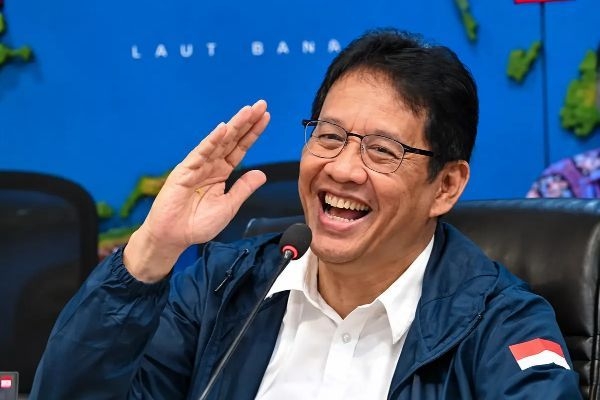
Finance Minister Purbaya Yudhi Sadewa was in the middle of telling members of the Regional Representative Council (DPD) that several big businesses owed the state at least IDR 200 billion in back taxes when a staff member handed him a phone. Glancing at the screen, Purbaya abruptly walked out of the meeting, visibly nervous and caught off guard. The call was from the Palace. After speaking for a brief moment, he never returned to the room. Poor Purbaya had just been fired via a phone call after only a single year in office.
That is how disposable and disrespectfully treated a cabinet minister can be under President Prabowo Subianto. But if the manner of Purbaya’s sacking was cold and inhumane, the underlying reasons behind it revealed a far harsher political reality: saying no to expansive, politically sacred policies, or stepping on the toes of the ruling elite, is a career-ending offense.
Looking back at Purbaya’s short-lived tenure, his “sins” in the eyes of the Palace were not failures of capability, but acts of political transgression.
Perhaps Purbaya’s most apparent fatal “mistake” was exposing the long-term fiscal trap of legacy megaprojects, most notably the Whoosh high-speed rail. By publicly lifting the veil on the financial realities surrounding the project, a flagship legacy of former President Jokowi, Prabowo’s primary political patron, Purbaya made the public painfully aware that the financial burdens of this deal could weigh on Indonesian taxpayers for up to 80 years.
His post-dismissal remark: “Alhamdulillah, I’m saved from the Whoosh affair”, was a candid sigh of relief from a finance chief who knew the debt burden was unsustainable. But while Purbaya escaped the mess, future generations of Indonesians remain trapped by it.
Beyond policy critiques, Purbaya took his reform drive directly into the entrenched patronage networks of the bureaucracy. He openly floated radical overhauls, even raising the idea of disbanding the Directorate General of Customs and Excise (Bea Cukai), an agency whose leadership is widely associated with powerful military and political circles close to the President.
Furthermore, Purbaya launched a sweeping administrative cleanup within both the Directorate General of Taxes (DJP) and Bea Cukai, initiating massive rotations and replacing key officials. This internal housecleaning created intense friction within the Ministry of Finance. Replacing individuals who were handpicked by the Palace angered powerful insiders, who made no secret of their relief the moment Purbaya was ousted. Purbaya himself acknowledged that pushing these internal reforms was a primary catalyst for his dismissal.
If Purbaya’s internal reforms created enemies, his treasury management created an existential conflict with the administration’s core economic project: Danantara, the National Wealth Fund designed to operate as Indonesia’s economic superholding company.
Facing a widening deficit in the state budget (APBN), Purbaya insisted that Danantara transfer roughly IDR 120 trillion ($6.8 billion) in State-Owned Enterprise (SOE) dividend profits straight back into state coffers under non-tax revenue (PNBP). Danantara’s leadership strongly objected, wanting to keep those assets consolidated within their autonomous off-budget fund. But Purbaya pushed hard, acting as a traditional treasury guardian who believed state-generated wealth belonged in the national treasury, not in an off-budget vehicle managed by executive insiders.
The final straw came when Purbaya attempted to apply the brakes to the President’s signature political promise: the free nutritious meal program managed by the National Nutrition Agency (BGN). Purbaya sought to trim the 2027 BGN budget to below IDR 200 trillion from its original ceiling of around IDR 240 trillion. Attempting to cut funding for the President’s prized political flagship proved unthinkable.
These five political friction points completely dismantle the popular narrative celebrating Purbaya’s replacement, Suahasil Nazara, as a triumph for “fiscal discipline” and “market stability.”
When an administration replaces a Finance Minister who exposes unsustainable legacy debt, attempts to clean up tax and customs offices, fights to bring off-budget SOE funds back to the state treasury, and tries to curb massive flagship spending, it is not looking for a fiscal hawk. It is looking for a financial facilitator.
It was no coincidence that immediately after taking his oath of office, Suahasil made his operational directive clear, stating that his primary duty was to maintain a trustworthy APBN while ensuring the budget “supports the government’s priority programs.”
Suahasil brings administrative harmony and institutional reliability, virtues that markets prize because they reduce policy unpredictability. But replacing friction with compliance is not the same as enforcing fiscal restraint. It simply means that the internal resistance slowing down aggressive executive spending and threatening elite interests has been removed.
The abrupt dismissal of Purbaya Yudhi Sadewa marks a clear transition from policy friction to total operational alignment.
When a minister who tries to pull the handbrake on unsustainable megaprojects and curb political spending is humiliated and discarded, the lesson for every bureaucrat in Jakarta is crystal clear: protect executive priorities at all costs, or be replaced by someone who will.
Moving forward, Indonesia’s formal financial indicators will likely preserve the statutory 3% deficit cap on paper to satisfy rating agencies and foreign lenders. But behind that formal curtain, off-budget vehicles like Danantara and tailored fiscal engineering will be mobilized to fund expansive political promises.
Replacing Purbaya removed the awkward public clashes that unnerved foreign investors over the past year. But anyone expecting this cabinet reshuffle to bring genuine fiscal discipline will soon realize that harmony at the top was engineered not to curb spending, but to clear the runway for it.
