

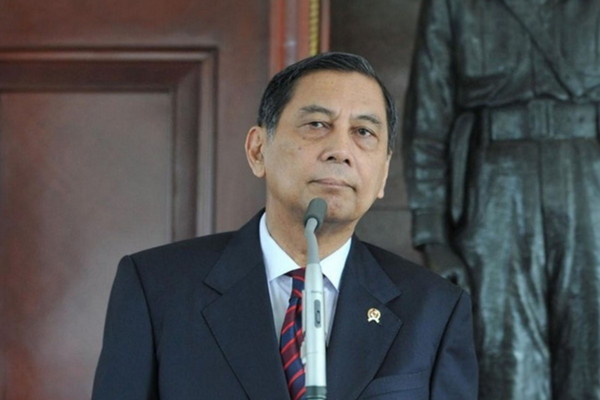
As the lead reporter for The Jakarta Post at the hyped UN Climate Conference (COP 13) in Bali in December 2007, I was more than a little surprised when Jusuf Wanandi, co-founder of both the newspaper and the Centre for Strategic and International Studies (CSIS), ordered me to return to Jakarta to cover an event at CSIS.
What were they thinking? I was at the center of the world, covering one of the most important global gatherings of the time, only to be told to fly back to Jakarta and, on the very same day, return again to Bali.
It turned out I had been sent to cover a speech by none other than then defense minister Juwono Sudarsono, and to write it up for the next day’s edition before heading back to the climate summit.
It also turned out to be an honor.
The speech was not routine. It was a rare and deeply considered articulation of Indonesia’s defense structure and strategic outlook, one that, in many ways, would continue to shape the thinking of successive Indonesian governments for years to come.
From that day on, I found myself growing closer to Juwono. We met several times in cafés across Jakarta, in conversations that ranged widely, from the governing style of his boss, President Susilo Bambang Yudhoyono, to the shifting currents of Indonesian politics, and, occasionally, to the quiet gossip of officials and public figures.
I had, of course, known him before. As a former student of international relations at the University of Indonesia, I knew Juwono as a towering and widely admired scholar, the kind of professor whose reputation traveled far beyond the classroom.
But this was different.
Now, I encountered him up close and personal. And it was in those moments, away from podiums and official titles, that his humility, generosity, and quiet wisdom revealed themselves most fully, earning my enduring respect.
It was this combination of intellect without arrogance, power without pretension, that defined him. And it was already evident when I wrote about him in 2010, trying to capture a man who, even then, seemed to stand slightly apart from the political class around him. In hindsight, what I wrote about him for The Jakarta Post in 2010 now read less like a profile of a serving minister than a quiet premonition.
Back then, Juwono struck me as someone who had begun to see politics with a clarity that only comes with age. He spoke not in slogans, but in long arcs, linking Indonesia’s domestic challenges to global shifts, reading the behavior of great powers with a calm realism, and, at times, predicting developments that others missed.
He was, in many ways, a rare figure in Indonesian public life: a scholar who entered power but never fully belonged to it.
Born in 1942 in Ciamis, West Java, Juwono Sudarsono would go on to become Indonesia’s first civilian defense minister in decades, a historic break in a system long dominated by the military. He served across multiple administrations, from the final days of the New Order to the fragile years of reformasi, and later under President Susilo Bambang Yudhoyono, occupying roles that ranged from education minister to ambassador, before returning to defense.
Yet titles alone do not explain his significance.
What set Juwono apart was not merely that he was a civilian leading the defense ministry, but how he approached that role. He saw defense not as a narrow military domain, but as a broader intellectual and societal project, one that required the integration of knowledge, governance, and democratic accountability.
In our conversations, he often returned to this idea: that Indonesia’s strength could not rely solely on weapons or soldiers, but on the quality of its institutions and the maturity of its political thinking.
Looking back today, that perspective feels almost out of place.
Juwono belonged to a generation of Indonesian policymakers who believed that ideas mattered, and that careful analysis, historical awareness, and intellectual debate were not luxuries, but necessities. He moved comfortably between classrooms and public offices, between theory and practice, without ever fully surrendering one to the other.
And yet, he was also acutely aware of the limits of intellect in politics.
He understood power, how it worked, how it constrained, how it shaped outcomes. There was no romanticism in his view of governance. If anything, there was a quiet acceptance that wisdom does not always translate into influence, and that the most thoughtful voices are not always the most decisive.
This tension, between knowledge and power, between wisdom and action, defined much of his public life.
When he passed away on March 28, 2026, at the age of 84, Indonesia lost not only a former minister, but one of the last figures of a particular kind: the scholar-statesman who believed that governance could still be guided by reason.
In the years since I first met him, Indonesia has changed. Its politics has grown louder, faster, more performative. The space for quiet reflection, the kind Juwono embodied, has narrowed.
And so, remembering him is not merely an act of tribute. It is also a reminder of a different standard of public life.
He once seemed to me a man growing older, and much wiser.
The more unsettling question, now that he is gone, is whether Indonesia has grown wiser with him, or whether it has simply moved on without listening.
***
Abdul Khalik is the Editor-in-Chief of Omong-Omong Media.
