

Five young Indonesians are already dead, and the state continues as if nothing fundamental has happened.
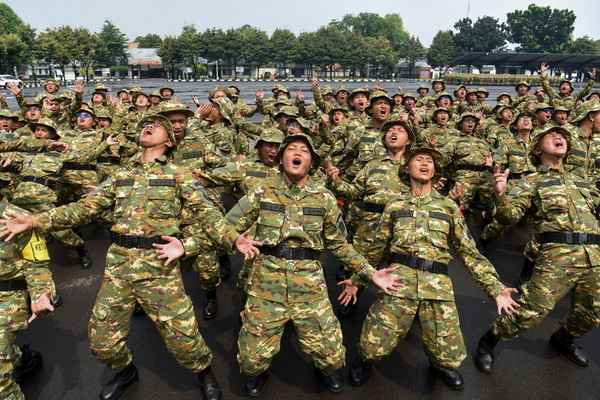
They were not soldiers preparing for war. They were university graduates recruited to manage village cooperatives and strengthen Indonesia’s people-based economy. Yet before they were taught how to manage businesses, build supply chains, protect cooperative finances, or serve their communities, they were sent into military training.
Five lives later, the military training program for candidates of Indonesia’s Merah Putih Cooperative managers continues without meaningful accountability.
This tragedy is not merely about a failed training program. It exposes a much deeper problem: the growing militarization of civilian life in post-Reformasi Indonesia.
The deaths of these young graduates reveal a dangerous transformation in the way the state understands governance. Economic challenges are increasingly treated as security challenges. Civilian institutions are increasingly placed under military logic. And programs designed to empower ordinary people are being built through structures that belong to a different world entirely.
Indonesia’s Reformasi movement was founded on a crucial historical lesson: the military must return to its professional role as a defense institution, while civilian governance must remain under civilian authority. The separation was not a technical arrangement. It was a democratic achievement after decades of military dominance.
Today, that boundary is being broken.
When Economic Development Becomes a Security Project
President Prabowo Subianto’s Merah Putih Cooperative (KDMP) and Kampung Nelayan Merah Putih (KNMP) programs are among his government’s flagship initiatives. The ambition is enormous: the creation of 80,000 village cooperatives and 1,100 fishermen villages across Indonesia.
To manage these programs, the government recruited around 35,000 university graduates under the Sarjana Penggerak Pembangunan Indonesia (SPPI) scheme. They were selected to become the professional managers of these economic institutions.
But instead of beginning with cooperative management training, accounting, entrepreneurship, market analysis, and financial governance, these young graduates were sent to military facilities.
The reason given was that military training would build patriotism, discipline, honesty, and leadership.
This justification raises a fundamental question: Why should civilian economic managers be trained as if they were soldiers?
A cooperative manager does not need battlefield skills. They need the ability to manage organizations, prevent financial abuse, develop local economies, understand markets, and create sustainable businesses.
Yet the training structure itself reveals the misplaced priorities. Military training reportedly received a larger portion of time than business training: around 30 days dedicated to military activities, from marching drills to weapons training, while business-related preparation received only 15 days.
The state appears more interested in producing disciplined subjects than capable economic managers.
Five Deaths and the Absence of Accountability
The victims, Muhammad Rifki Renaldi Gunawan, Novia Rahmadhani Sihotang, Yonanda Muhammad Taufiq, Anisa Muyassaroh, and Nola Diasari, were young graduates who entered the program with the expectation that they would contribute to national development.
Instead, their families received the devastating news of their deaths during military training.
In any normal civilian institution, repeated deaths during a mandatory program would immediately trigger suspension, independent investigation, and institutional responsibility.
Yet the response has been limited largely to evaluation.
Evaluation is not enough.
The central question is not simply whether the training procedure had weaknesses. The deeper question is why this program existed in the first place.
The Ministry of Defense and the military defended the training by arguing that it was necessary to build character and prepare participants as reserve components (komponen cadangan). Under Indonesia’s defense law, reserve components fall under military command.
But this creates a fundamental contradiction.
These young graduates were recruited to become cooperative managers. Their employer was PT Agrinas Pangan Nusantara, a state-owned company tasked with supporting food sovereignty and national economic goals. Their mission was economic.
Yet their preparation placed them within a military framework.
The state cannot simultaneously claim that these are civilian economic professionals while treating them as military personnel.
The Myth That Military Culture Creates Integrity
One of the strongest arguments behind the program is the belief that military training produces discipline and integrity.
But discipline is not the same as accountability.
A military background does not automatically prevent corruption. Like any institution, military organizations require strong oversight, transparency, and legal accountability.
The assumption that military culture alone can produce honest public servants ignores a more complicated reality: corruption is a problem of institutions, incentives, and accountability systems.
A cooperative manager does not avoid corruption because they know how to march or handle a weapon. They avoid corruption because they operate within transparent financial systems, independent supervision, clear regulations, and democratic accountability.
Indonesia does not need militarized economic managers. It needs professional economic managers.
The Return of the Military Solution
The cooperative training controversy cannot be separated from a broader political trend.
In recent years, the military has increasingly appeared as the preferred solution for civilian problems. Food security, villages, economic development, and social programs are increasingly connected to military involvement.
Supporters argue that the military has discipline, organization, and nationwide infrastructure.
But this argument ignores the historical experience of Indonesia itself.
During the New Order era, the military’s involvement in civilian administration through the doctrine of dual function (dwifungsi) allowed military influence to expand far beyond defense. Reformasi was built partly on rejecting that model.
The danger today is not necessarily a return to the past in identical form. The danger is the gradual normalization of military involvement in areas where civilian institutions should lead.
A democracy weakens not only when tanks enter political spaces. It also weakens when military methods become accepted as ordinary solutions for civilian challenges.
The People’s Economy Cannot Be Built Like a Military Operation
The tragedy of the five young graduates is symbolic.
They were supposed to become the builders of a people’s economy. Instead, they became casualties of a system that misunderstood what economic empowerment requires.
Indonesia’s villages do not need managers trained to behave like soldiers. They need professionals who understand farmers, fishermen, cooperatives, markets, technology, and governance.
The government should immediately suspend the military training component, conduct an independent investigation into the deaths, and redesign the program under civilian economic institutions.
A people’s economy cannot be built through military logic.
The lesson of Reformasi was simple: democracy requires clear boundaries. When those boundaries disappear, even the most noble national programs can produce consequences that nobody should accept.

