

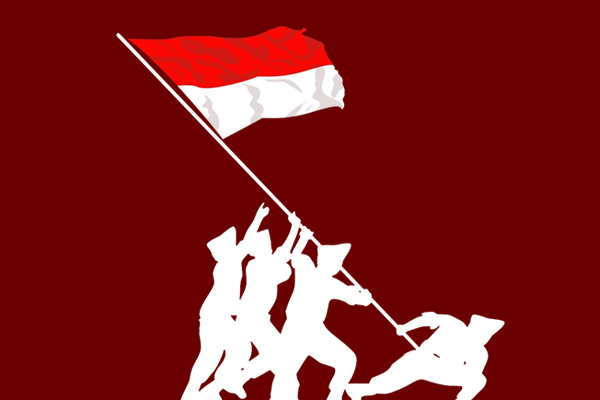
Indonesia marks its 80th year of independence under a cloud of irony. The red-and-white flag will once again be hoisted, the national anthem sung, and speeches filled with talk of unity and love for the motherland. Yet beneath these symbols lies a fragile public trust. Corruption scandals persist, the media is often steered to hide them, and the law remains sharp against the powerless but blunt toward the powerful. In this climate, pride in independence is laced with bitterness, as if the nation’s history were being replayed on a stage of political absurdity.
Governance feels broken. Press freedom and the rule of law are deteriorating. Journalists reporting on corruption face harassment, or worse. Tempo magazine suffered a cyberattack after exposing officials involved in an international gambling scandal. Human rights groups and media associations have documented hundreds of cases of violence or intimidation against reporters. New rules now require foreign journalists to obtain police clearance before reporting, raising fears of censorship. Meanwhile, the law is enforced selectively: a student’s pirate flag is branded “treason” while high-profile graft cases draw minimal punishment. When an international anti-corruption group listed former President Widodo among the world’s most corrupt leaders, an activist who referenced it was doxxed. Indonesia’s Corruption Perceptions Index has fallen back to levels from a decade ago, as political dynasties further entrench their power.
This selective justice spares the powerful while targeting dissenters. Symbolic acts like flying a cartoon flag are met with sedition charges, while low-level officials implicated in graft often escape consequences. Critics warn of quiet legal changes that could muzzle opposition, such as a proposed broadcasting law that could create an “information blackout.” Bureaucratic opacity and nepotism deepen public cynicism, making it seem as though the government prioritizes protecting privilege over serving citizens.
In response, Indonesians have found unconventional outlets for dissent. Ahead of August 17, the black Jolly Roger from the Japanese manga One Piece became a viral protest symbol. Its pirate narrative—underdogs resisting a corrupt world government—resonated with many. Graffiti and flags featuring the skull-and-crossbones appeared alongside the national flag. Street artists used it to protest corruption and unemployment, saying they wanted the government to listen. This harmless pop-culture emblem became a mirror of frustration.
Another trend emerged online: the hashtags #KaburAjaDulu (“let’s just escape first”) and #PindahAjaDulu (“just move abroad”), with young people discussing emigration as a form of self-preservation. Many cited economic dissatisfaction, social injustice, and poor governance as reasons to leave. On social media, Indonesians shared tips for living in Singapore, Australia, and elsewhere, an informal exodus guide. Reuters reported that during February’s “Dark Indonesia” protests, the “Just Escape First” theme was widely discussed as a form of cultural resistance.
The discontent spilled into the streets. In February 2025, thousands of students in dozens of cities joined the Indonesia Gelap rallies, dressed in black and carrying placards. They protested budget cuts to education and subsidies, the military’s growing civilian role, and other policies seen as unjust. These were the largest demonstrations since the Suharto-era reforms, recalling the 1998 protests that toppled the regime. University campuses saw students burn tyres and chant slogans. Online, hashtags like #IndonesiaGelap and #TolakOmnibusLaw gained millions of views. Surveys show that about 85% of Indonesians still support democracy, even if some would trade certain freedoms for economic stability. The message is clear: passive patriotism no longer suffices.
Under such circumstances, celebrating Independence Day means more than parades or games. For many young Indonesians, nationalism is now tied to the struggle for justice and equality, rather than just flags or songs. Love of country is expressed through the fight for social justice, equitable education, free expression, and environmental sustainability. Social media has become a battleground for national issues, with hashtags like #ReformasiDikorupsi, #PapuanLivesMatter, and #SaveMeratus driving public engagement. Campaigns such as #SaveOurFuture in 2023 mobilized thousands to plant over 27,000 mangrove trees, showing how independence can be celebrated through ecological action.
Art also serves as a tool for reflection and critique. The 2025 POSCART: Hope for Indonesia exhibition showcased 80 illustrated postcards envisioning the nation’s future, sparking dialogue between artists and the public. A 2019 Bali exhibition portrayed independence as creative freedom, while mural competitions each August embed social and political messages into public spaces. These cultural acts turn art into a form of civic participation.
Grassroots solidarity also plays a role. Communities across Indonesia organize neighborhood clean-ups, disaster relief drives, blood donations, and local empowerment programs such as waste banks and cooperatives. Philanthropic organizations remind citizens that poverty, inequality, and injustice are the modern forms of colonization. Through these acts, independence becomes a living commitment to social welfare, rather than just a date on the calendar.
These evolving celebrations invite reflection: independence is hollow without citizen participation in defending founding values. Bhinneka Tunggal Ika (Unity in Diversity) remains relevant, but it must be upheld through people-oriented policies and open civic spaces. Without these, August 17 risks becoming an empty ritual. It should instead serve as a collective checkpoint to evaluate progress, confront failures, and recommit to justice, equality, and environmental stewardship.
Yet hope persists. Indonesia remains a democracy in structure, and most citizens say they prefer it. Recent surveys show that roughly three-quarters are satisfied with the state of democracy. The fact that students, vendors, and ordinary people still speak up shows that civic spirit is alive. Indonesia has endured dictatorship, economic collapse, and natural disasters before, always finding ways to recover. The Reformasi legacy proves that deep change is possible when people demand it.
Youth activism is a powerful source of optimism. Today’s young Indonesians are globally connected, culturally savvy, and unwilling to accept stagnation. They know the history of 1998, are aware of political transitions elsewhere in Southeast Asia, and use creative methods, like an anime flag, to express dissent. Internationally, Indonesia’s strategic significance means the world is watching how it handles rights and governance, and this scrutiny can drive reforms.
Civil society remains active. NGOs, academics, journalists, and even some parliamentarians continue to challenge undemocratic moves. Religious leaders often call for moderation. Protesters demand concrete policy changes, not anarchy, showing they have a genuine stake in the nation’s future. Surveys show that Indonesians overwhelmingly believe their fate should be decided through elections. This “culture of democracy,” though fragile, provides a foundation for renewal.
Looking ahead, love for the nation must be translated into action. The same creativity that fuels protest can also power innovation, business, and community problem-solving. Indonesians studying abroad can return or contribute from afar, bringing new ideas and global connections. At home, grassroots mutual aid and civic tech platforms demonstrate a refusal to wait for authorities to act. Even humor and satire online keep political discourse alive.
Independence was never meant to be a one-day celebration, but a continuous project. On this 80th anniversary, patriotism should be defined not by uncritical loyalty, but by the ongoing demand for justice, equality, and dignity for all. The 1945 proclamation freed Indonesia from colonialism. Now, the challenge is to free its institutions from corruption—and its politics from fear. If Indonesians meet this challenge with courage and creativity, the spirit of ’45 will endure, and the future, though uncertain, can still be bright.
Editor: Abdul Khalik
