

“Please, release my daughter. She did nothing wrong.”
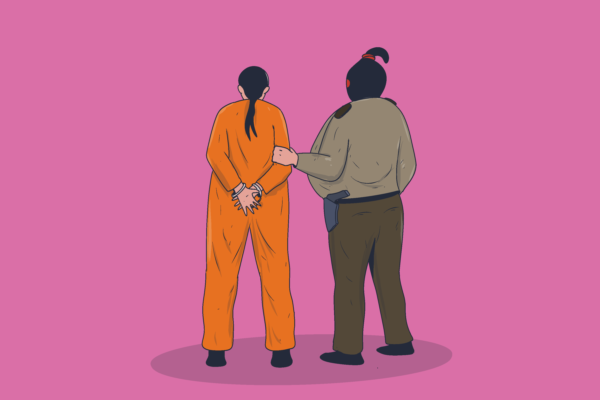
The desperate cry of Laras Faizati’s mother to President Prabowo Subianto and the national police chief cuts through the haze of media spin like a blade. Her daughter, an employee at the ASEAN Inter-Parliamentary Assembly, was arrested for a social media post expressing frustration over police brutality during Indonesia’s mass protests.
Laras’ words, taken out of context, were transformed into an excuse for criminalisation. This is repression in a most blatant sense.
The arrest of Laras Faizati is not an isolated act of overreach. More than 3,000 activists, young workers, professionals, and students across Indonesia have been arrested for expressing similar frustrations, according to data from the Indonesia Legal Aid Foundation (YLBHI). Lokataru Foundation Executive Director Delpedro Marhaen, for instance, was detained based on a police accusation that he had incited young people to join the protests. In reality, he was arrested and named a suspect without due process, simply because he had the courage to resist.
Their arrests is part of a broader campaign designed to stoke fear in the hearts and minds of the Indonesian people, to make dissent feel dangerous and resistance seem futile. The police, emboldened by the government’s open-ended mandate to “maintain order,” are no longer instruments of justice, but agents of political control. They no longer answer to the rule of law, but to the logic of power. Indonesia is turning into a police state.
Arbitrary arrests, like that of Laras Faizati and many others, serve a dual purpose: punishment and warning. The state no longer needs to silence everyone, just enough people to make the rest fall quiet on their own. These arrests are carefully chosen acts of intimidation. They send a message: you could be next. Your social media post, your speech, your presence at a protest, any of it can be reinterpreted as a threat.
This is fear as policy.
And it is working. The chilling effect on public discourse is undeniable. Social media, once a space for critique and mobilisation, is now monitored and mined for “evidence.” Campuses, historically breeding grounds for resistance, are being turned into hunting grounds for riot police. The line between expressing frustration and committing a crime is being erased, replaced with a convenient narrative: dissent equals danger.
The seeming success of these authoritarian tactics appears to have given President Prabowo a dangerous sense of historical vindication. His government’s brutal handling of recent protests suggests a disturbing reinterpretation of 1998, not as a triumph of civil courage, but as a failure of the state to deploy its full coercive might.
It is no accident that Prabowo chose to attend China’s Victory Day parade on September 3, 2025, an authoritarian show of military strength, while his own citizens were being tear-gassed and arrested back home. Standing beside Xi Jinping, Vladimir Putin, and Kim Jong-un, he signaled not just geopolitical alignment but ideological affinity. It was a message both to the world and to the Indonesian people: this is the model. And in this model, the police state is not a temporary measure. It can be the system.
In a functioning democracy, law enforcement exists to uphold rights, not to crush them. But in a police state, the opposite is true. The law becomes a weapon, not a shield. Charges of “incitement” or “spreading misinformation” are vague enough to apply to anyone, and harsh enough to deter everyone.
The power of arbitrary arrest lies not in who is taken, but in who is silenced as a result.
Laras Faizati’s arrest did not stop the protests. But it did warn others: if even a young, professional woman can be pulled into custody for a frustrated post, then no one is safe. The regime doesn’t need mass arrests to instill control. It only needs targeted ones, and the silent complicity of the rest of society.
This moment marks a moral crisis more than a political one. Indonesia allowing authoritarianism, not simply facing it. And it is this silent allowance, this retreat from resistance, that poses the greatest threat. As the regime chips away at civil liberties with calculated precision, the public retreats further into fear, isolation, and apathy.
But the erosion of democracy is not inevitable. History has shown that civil society can, and must, rise again. The 1998 reform movement was not inevitable. it was the result of courage, sacrifice, and collective refusal to accept injustice. The current generation must recover that moral clarity.
It must remember that silence is not safety. It is surrender. That neutrality in the face of repression is not wisdom. It is complicity.That nostalgia for authoritarian “order” is not pragmatism. It is dangerous revisionism.
The police state thrives on fear. It is built on the premise that people will choose comfort over courage, silence over solidarity. Laras Faizati’s arrest, and the quiet suffering of so many others like her, is a test of our collective conscience.
Will we speak, while we still can? Will we organise, while it is still possible? Or will we wait, until the knock comes on our own door, and there is no one left to hear the plea?
“Please, release my daughter.”
Her mother’s voice is the voice of democracy itself, crying out not just for one child, but for an entire generation under siege.

